Individualized major proposal
AI in Human Systems
Christina Kodsi & Gemma Levy

About the major
Bridging Technology and Purpose: This major explores Artificial Intelligence models as tools (hammers) to address specific challenges (nails) that shape individuals and society (wooden planks). By aligning cutting-edge AI technologies with real-world applications, students build solutions that are innovative, impactful, and foundational for the future.
Four Pillars of the Major
Technical Foundations
This pillar will marry Computer Science and Neuroscience courses into a meaningful understanding of the parallels between AI mechanics and human cognition. It will treat Artificial Intelligence as an application of models of human cognition to result in implementation that addresses the bigger picture. CIS provides the skills to develop and optimize algorithms, while Neuroscience offers insights into learning, decision-making, and language processing. Together, they form a comprehensive framework for creating AI technologies that are both functional and human-centric.
Alignment
This pillar addresses the critical alignment problem in the AI industry, ensuring that AI systems' goals, behaviors, and decisions align with human values and intentions. As AI technology evolves rapidly, it is essential to develop frameworks for tackling ethical and societal considerations. Through an interdisciplinary curriculum combining PHIL, STSC, ENGL, and SOCI, this pillar equips students with the tools to navigate and shape the responsible development of AI.
Fine-Tuning
Fine-tuning in AI is the process of taking a pre-trained model—one that has already been trained on a large, general dataset—and further training it on a smaller, specialized dataset to adapt it to a specific task or domain. Businesses across all industries are racing to implement fine-tuned models into their operations. Courses in business and technology deployment will provide students with the knowledge to identify opportunities, evaluate market needs, and integrate fine-tuned AI solutions to drive innovation and competitive advantage in real-world settings.
Composition
This pillar integrates an understanding of how humans interact with these technologies. These courses are essential because they focus on creating AI systems that are user-friendly, intuitive, and accessible. Courses in Human-Computer Interaction (HCI) exemplify how humans interact with technology, providing a deeper understanding of how these systems should be designed. Product Design courses help develop technologies that are not only functional but visually appealing, efficient, and suited to real-world applications. Together, these two courses provide a unique perspective of human-focused design pertaining to LLMs.
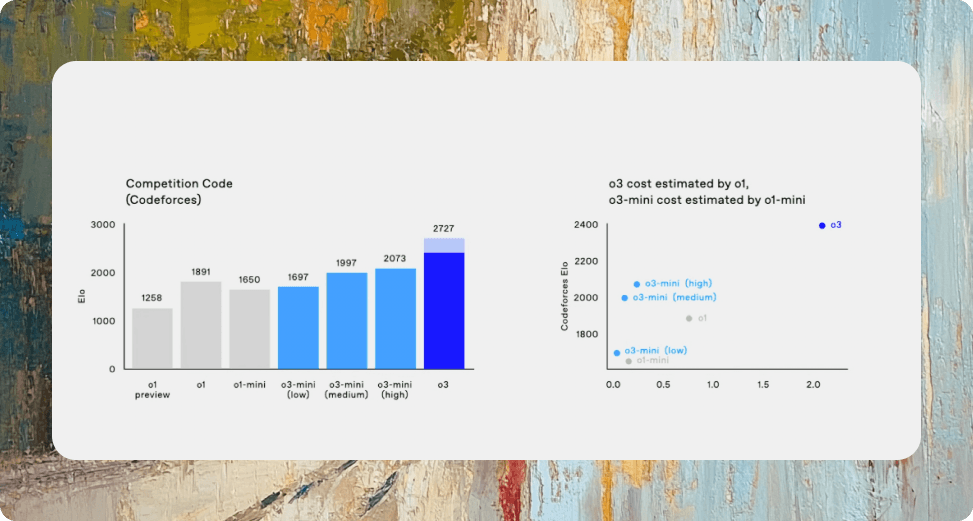
o3 evaluation results, showing clear progress towards an AGI future by the time we graduate.
Coursework - Breaking Down the Major
There is a gap between the educational coursework at the graduate/professional and the undergraduate levels. Within the AI scope at Penn, related coursework is only addressed in the Wharton and Engineering Schools. This coursework will address this lag and allow us to innovate our thinking.
Technical Foundations
ESE 2000: Artificial Intelligence Lab: Data, Systems, and Decisions
ESE 2030: Linear Algebra with Applications to Engineering and AI
ESE 3060: Deep Learning: A Hands-on Introduction
CIS1902: Python Programming
CIS 4210: Introduction to Artificial Intelligence
BIOL/NRSC1110: Introduction to Brain and Behavior
NRSC 2249: Cognitive Neuroscience
Alignment
PHIL 1800: Phil of Science
STSC 3644: Minds, Bodies, and Machines
SOCI 3051: Machine Learning for Social Science
ENGL 2666: Algorithmic Ethics
Fine-Tuning
OIDD 2550: Artificial Intelligence, Business, and Society
OIDD 3140: Enabling Technologies
COMM 4190: Talking with AI: Computational and Communication Approaches
Composition
OIDD 4150: Product Design
CIS 4120: Introduction to Human Computer Interaction
DSGN 2570: User Experience (UX) and User Interface (UI) Design
“Over the course of the last 10 years, 15 years, almost everybody who sits on a stage like this would tell you that it is vital that your children learn computer science. [That] everybody should learn how to program. And in fact, it’s almost exactly the opposite.
It is our job to create computing technology such that nobody has to program and that the programming language is human. Everybody in the world is now a programmer.
This is the miracle of artificial intelligence.”
Jensen Huang, Nvidia founder & CEO
Questions about the major
Common concerns you may have.
Question one: What about the AI major in SEAS?
The Artificial Intelligence major in SEAS provides a purely technical route that does not at all emphasize societal problems related to the implementation of this technology. This path typically prepares students to work in ML research and engineering positions, failing to encompass ethical and operational considerations
Question two: What about CIS?
As the quote above states, everyone in the world can now be a programmer with the power of Generative AI. These technologies will only continue to improve and become more precise. To successfully tackle today’s problems, a rethought course of study is necessary. Similar to the AI major, this path is one-dimensional and fails to expand upon the applications of AI.
“If, say, you’re a college student preparing for life in an A.I. world, you need to ask yourself: Which classes will give me the skills that machines will not replicate, making me more distinctly human?”
David Brooks, NYT
Question three: What about Cognitive Science?
The Cognitive Science major is a descriptive course of study. It focuses on the mind and cognition as related to the individual. As important as this field is for the development of artificially intelligent systems, the major at Penn does not address AI solutions nor societal development.
Question four: What about Political Science / IR as a second major?
Though these majors teach students to think critically about the world and global impacts of technological advancements, there is no coursework that specifically discusses how these systems should be created with humanistic concerns in mind. We imagine this major as an interdisciplinary pursuit that will answer similar questions that the Political Science and International Relations courses address while also applying practical and specialized knowledge in AI systems.
Question five: Does this make you a Generalist?
This major is designed to explore the intersection of technology, user behavior, and real-world applications, but it is far from producing generalists. While its interdisciplinary nature fosters a broad foundation, its focus on fine-tuning and applying AI technology to specific use cases creates highly specialized expertise. Unlike a traditional AI/ML research track, this major prepares students to lead in emerging areas like AI regulation and governance, strategic leadership, and practical innovation within technology companies. It equips us to address the nuanced challenges of generative AI, making us versatile but deeply focused leaders in this transformative field.
“Many things that once seemed exclusively human will be able to be done by AI. So, by embracing this principle, you can view AI’s limitations as transient, and remaining open to new developments will help you to adapt to change…and remain competitive in a fast-paced business world.”
Ethan Mollick, Author of Co-Intelligence
Question six: Why in the College? Not Wharton or Engineering?
The study of AI at Penn is primarily concentrated within Wharton and the School of Engineering and Applied Science (SEAS), leaving a significant gap within the College of Arts and Sciences. Although the College offers compelling AI-related courses and seminars, they remain fragmented. This individualized major seeks to bridge that gap by integrating these diverse offerings into a cohesive, interdisciplinary course of study. While Wharton emphasizes the implementation of AI and SEAS focuses on its technical development, this major will uniquely blend both perspectives with a critical exploration of AI's impact on society and the individual.
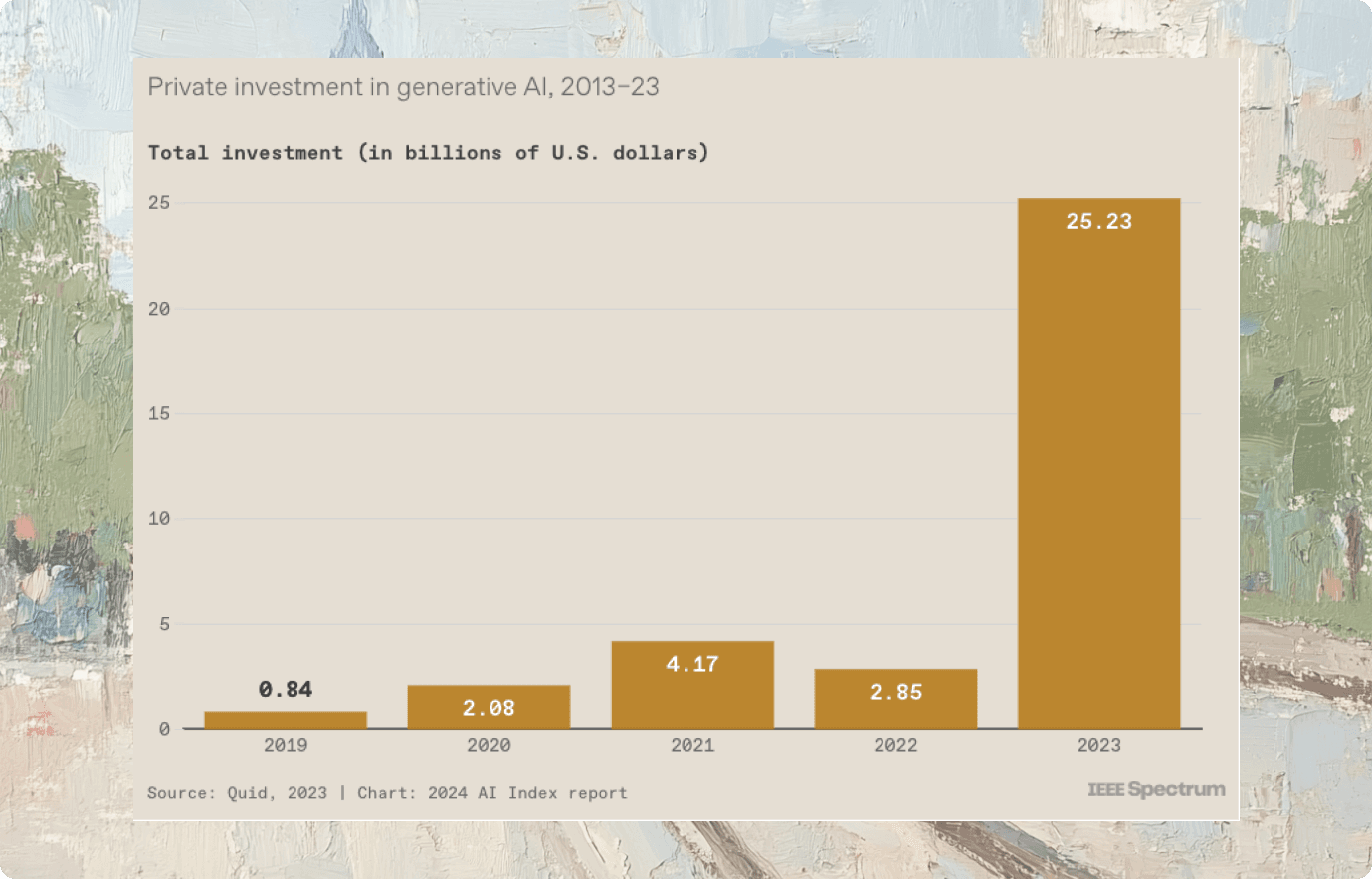
Generative AI investment in the last 4 years.
Why at Penn? Why now? Why us?
Moving forward, the focus is no longer just on creating generative AI—it’s about mastering how to harness its potential effectively. Penn has already established itself as a leader in the Ivy League by introducing the first Artificial Intelligence major, and now it's time to take this commitment to innovation even further with an individualized Applied Artificial Intelligence major. As universities across the nation recognize the growing value of this interdisciplinary approach, Penn has a unique opportunity to lead the charge. The rapid advancements in generative AI are revolutionizing industries at an unprecedented pace, making it imperative to cultivate professionals who can navigate both its technical intricacies and far-reaching societal impacts. By establishing this major now, Penn can solidify its position at the forefront of this transformative era, equipping students to drive ethical AI innovation across diverse sectors such as consumer retail, policy, and beyond. This is a pivotal moment, and by pursuing this individualized major, we can position ourselves as trailblazers in shaping the future of applied AI.
Alignment with Penn's Mission
Following in Ben Franklin's footsteps, this major is a path towards innovation.

The University of Pennsylvania
Quotes Taken from Penn’s College of Arts and Sciences Website
How does this fit into Penn's mission and values?
“From its central position in an international research university…”
The major leverages Penn's unparalleled resources as a world-class research institution, connecting cutting-edge advancements in AI with diverse disciplines such as neuroscience, design, ethics, and healthcare. By situating this major within the College of Arts and Sciences, students can engage in multidisciplinary inquiry that reflects the university’s global reach and research excellence.
“…the College of Arts and Sciences invites students to explore the broad spectrum of human knowledge…”
This major perfectly embodies the invitation to explore knowledge broadly. It bridges technical fields like computer science and engineering with the humanities, such as philosophy and ethics, enabling students to understand not just how AI works but its broader implications for society, behavior, and human systems.
“…and takes pride in its capacity to respond to the particular intellectual needs of those who join it.”
This major is the epitome of responding to individual intellectual needs. It provides a tailored curriculum for students who see their interests at the intersection of AI, healthcare, and human systems, offering them the flexibility to delve deeply into their unique passions while gaining practical, real-world skills through personalized research opportunities.
“The College’s goal is to help students to become knowledgeable about the world and the complexities of today’s society…”
The major equips students with the tools to understand and address one of the most complex and transformative phenomena of our time—generative AI.
“…aware of moral, ethical and social issues…”
Ethics is central to this major, as seen in the alignment pillar, ensuring that students grapple with the profound moral and social questions posed by AI, such as fairness, bias, and privacy.
“…prepared to exercise intellectual leadership…”
The interdisciplinary nature of this major—spanning philosophy, business, cognitive science, and engineering—prepares students to lead conversations and innovations at the intersection of AI and human systems.
“…and enlivened by the use of their minds.”
This major is designed to spark intellectual curiosity, encouraging students to ask big questions about the role of AI in shaping human experience.
“We believe that students should explore fundamental approaches to the acquisition and interpretation of knowledge…”
The major emphasizes both the development and application of knowledge, blending technical expertise in AI with critical thinking from the humanities and social sciences.
“…through introduction to substantive bodies of current thought in the natural sciences, social sciences and humanities.”
The curriculum spans multiple disciplines, introducing students to the latest in AI technology (natural sciences), human behavior and societal impact (social sciences), and ethical frameworks (humanities). This comprehensive scope ensures that students not only learn but critically interpret and apply knowledge.
“There is no single or easy path to the benefits of liberal education. A program of study must be shaped as a student grows. But the special strengths of the University of Pennsylvania–its combination of academic and professional excellence, its diverse and interdisciplinary tradition, its active community of scholars at all levels of experience–provide a setting in which the College can dedicate itself to nurturing honest, eager, and critical minds.”
About us
We want to be leaders, do-ers, and creators at Penn. This individualized major emboldens us to do exactly this.

Christina Kodsi
Through my studies in Cognitive Science, I became fascinated by the connection between the mind and technology, seeing generative AI as the next step in applying human cognition to innovation. My experience in policy sparked my interest in the regulation of emerging technologies like AI, shaping my goal to pursue a career in AI and tech regulation. Research in cognitive-behavioral therapy (CBT) models has allowed me to explore AI’s potential in mental health solutions, reinforcing my desire to bridge technology and policy. This individualized major will equip me with the skills to harness generative AI’s power responsibly and effectively.
Gemma Levy
Generative AI is transforming healthcare, and I want to lead this change. My experiences have shown that traditional academic frameworks, like cognitive science, are too theoretical and lack the applied knowledge needed for real-world impact. At Woebot, I explored NLP’s potential in underserved adolescent mental health care, deepening my focus on equitable solutions. At Holo, I leveraged large language models for remote therapeutic monitoring, addressing physician shortages with scalable, human-centered tools.
These roles exposed critical challenges in policy, ethics, and business integration, which I navigated by bridging technical and business domains. I am eager to build on this by working with Dr. Gary Weissman to test large language models in ICU settings, assessing their ability to generate reliable, actionable recommendations in high-stakes scenarios.

Contact us
ckodsi@sas.upenn.edu
gemmale@sas.upenn.edu